Download the Fact Sheet (PDF)
The Problem
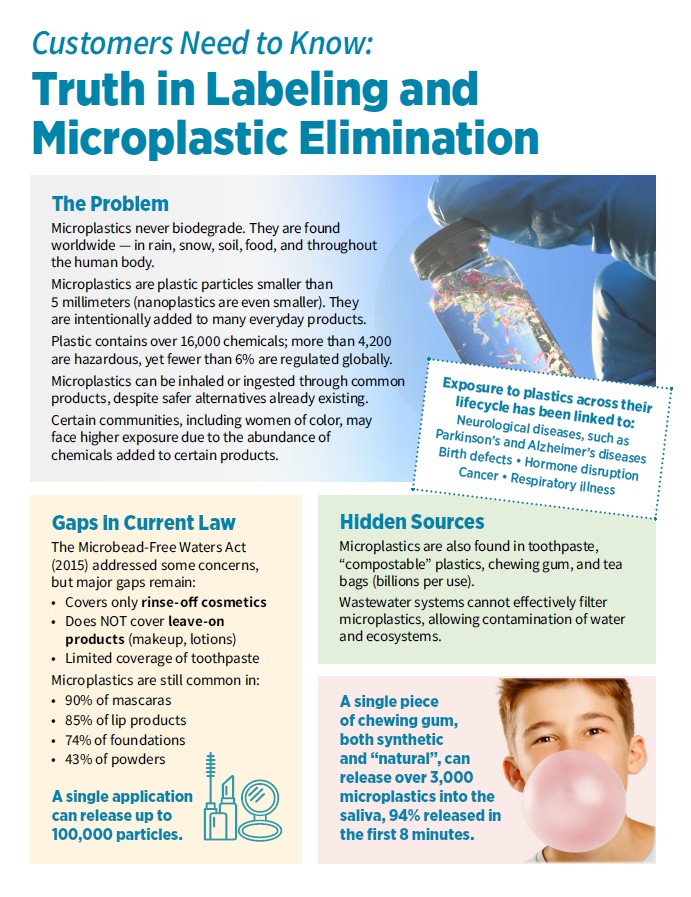
Microplastics never biodegrade and are being found worldwide--in rain, snow, soil, food, and throughout the human body.
Exposure to plastics across their lifecycle is harmful to our health, being linked to numerous cancers, hormone disruption causing infertility and birth defects, respiratory and cardiovascular diseases, and neurological diseases such as Parkinson’s and Alzheimer’s.
Microplastics are intentionally added to many everyday products which can be inhaled or ingested, despite safer alternatives already existing. Certain communities, including women of color, may face higher exposure due to the abundance of chemicals added to certain products.
The Solution
1. Truth in Labeling: Clear labeling allows consumers to make informed choices.
2. Eliminate Microplastics. Phase out use in:
- Cosmetics
- Personal care products
- Toothpaste
- Chewing gum
- Tea bags
- Foodware
- Cleaning products
3. Safer Alternatives. Replace microplastics with:
- Sugar, salt, coffee, oats
- Natural gum bases (chicle, mastic)
- Fruit seed powders (olive, apricot, raspberry)
- Pumice
- Nut shells (walnut, pistachio, almond, peanut, argan)
Learn more with Protecting Against Microplastics Fact Sheet
Take Action
Support NJ A5452 (Protecting Against Microplastics Act) that require transparent labeling and eliminate unnecessary microplastics! Ask your legislators to protect our communities from microplastics.
For More Information
Contact Marta Young, NJ Deputy Director, Clean Water Action